

A Farewell to Pandas? (Axios)
See them while you can. If the situation holds, American zoos will no longer host giant pandas after 2024. The nation of China has leased pandas on scientific loans since 1996. Zoos are expected to pay up to $1 million per year per panda, along with a bonus for newborn cubs.
A Superb Sample (CNN)
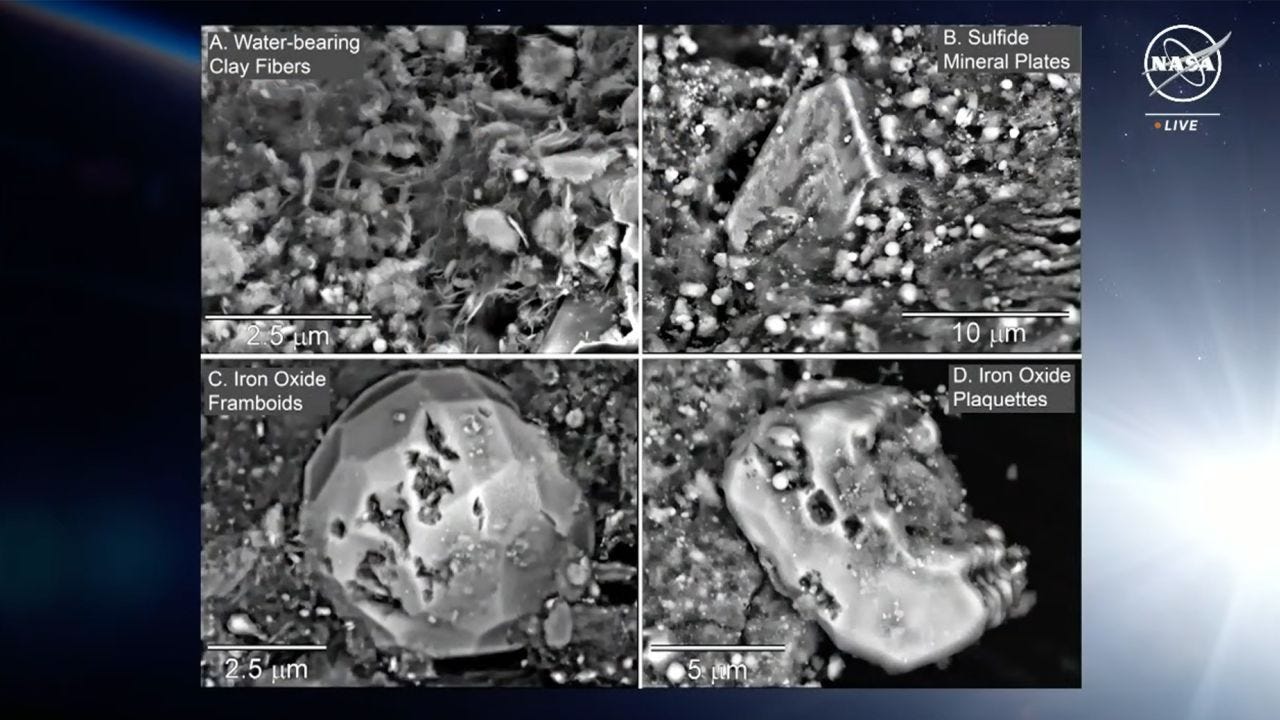
Water and carbon are among the findings within the pristine asteroid sample captured by the OSIRIS-REx project, which recently returned to Earth from the 4.5 billion-year-old asteroid Bennu. Scientists shared their findings on Oct. 11, describing “a treasure chest of extraterrestrial material.” NASA scientists posited that such asteroids might have been the original source of water coming to Earth.
A scientific shot in the dark seems to have hit the jackpot.
Eclipsing Awe (Associated Press)
On Saturday, Oct. 14, the “ring of fire” eclipse – an annular solar eclipse – will see moon line up between the Earth and the sun so that a bright border appears around the moon in a display that will be visible from Oregon to Brazil.
The event will be most visible in the western United States and in Central and South America.
It’s just the opening act for the total solar eclipse set for April 8, 2024.
Sound Reality (NPR)
Science is making it possible for coaches at Gallaudet University – a school for deaf and hard of hearing students – to pass plays to the quarterback using augmented reality in a new football helmet. The NCAA Division III team has struggled against teams with hearing athletes. AT&T helped develop the new helmet to help Gallaudet attack the play-calling aspect. The Bison were on a four game losing streak when they went into their Oct. 7 game against Hibbert College. That’s when they debuted the new helmet.
They got their first win of the season, 34-20.